
Stainless Steel Check Valve Types and Selection Guide
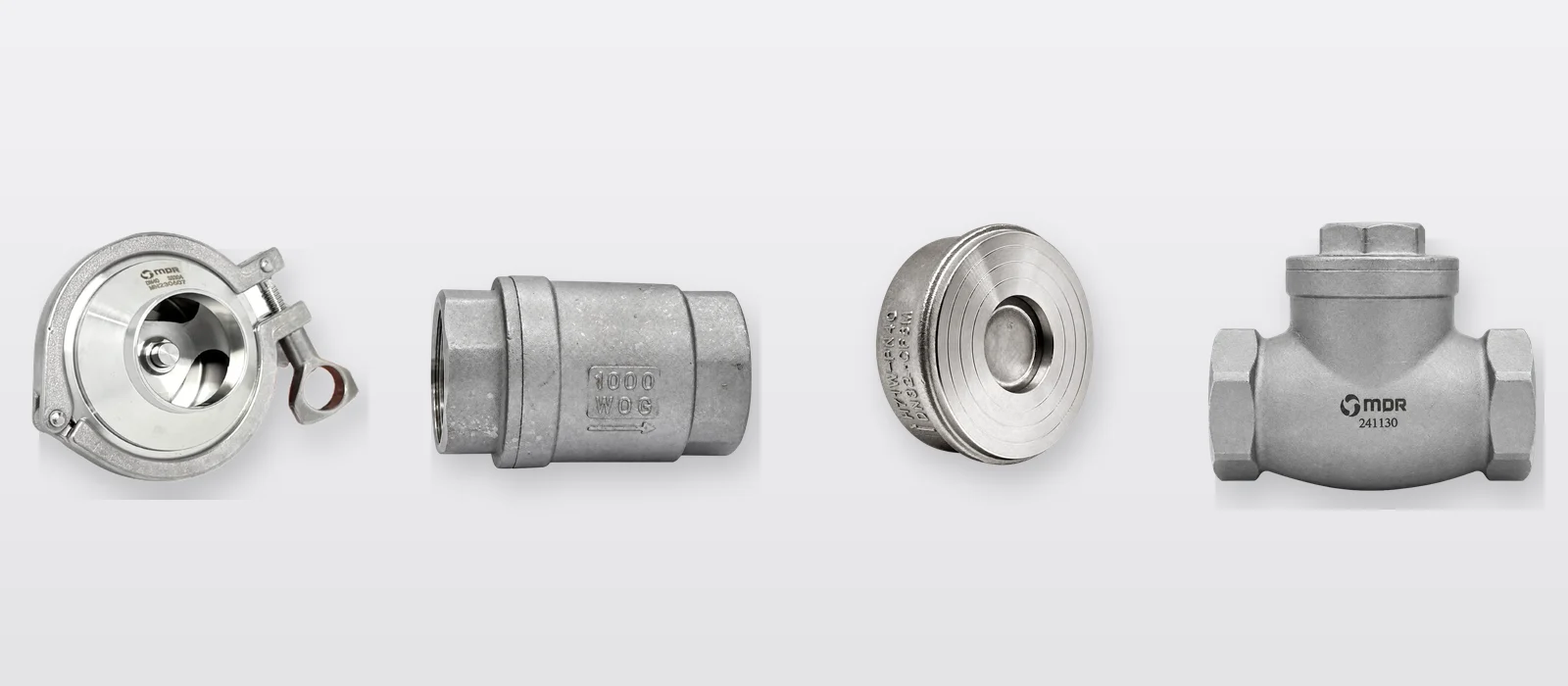
A check valve lets the medium flow in one direction only and prevents backflow in a pipeline. It is an essential element of process and utility lines for protecting pumps, flow meters and tanks against reverse flow. In this article we explain the types of stainless steel check valves, how they differ and what to consider when choosing the right check valve for your line.
What Is a Check Valve and How Does It Work?
A check valve operates by itself, without a lever or actuator. When the medium flows in the right direction, its pressure pushes the closing element and opens the valve. When the flow stops or starts to reverse, the closing element returns to its seat and shuts the line. The design of the closing element (disc, flap, etc.) depends on the check valve type.
The body of a check valve usually carries an arrow showing the flow direction. For the valve to work correctly, it must be installed in line with this direction.
Types of Stainless Steel Check Valves
Hygienic Check Valve
The hygienic check valve is designed for process lines where hygiene is critical, such as food, beverage, pharmaceutical and chemical production. Its product-contact surfaces are finished to Ra ≤ 0.8 µm, which makes it easy to clean and prevents product residue from building up. It is welded into the line, while its body is joined with a clamp, so the valve can be opened without removing it from the line and the internal parts are easy to reach for cleaning and maintenance. It is made of AISI 304 or AISI 316L stainless steel. Sizes from DN15 to DN100 are listed on the product page.
Vertical Check Valve
The stainless steel vertical check valve is suitable for vertical installation, which is an advantage where space is limited. It has threaded connections and is made of AISI 304 or AISI 316L stainless steel. Sizes from DN15 to DN80 and the pressure rating are given in the dimension table on the product page.
Disc Check Valve
The stainless steel disc check valve is designed for wafer installation and is clamped between two flanges in the pipeline. Its short face-to-face length means it takes up very little space in the line. The disc-shaped closing element causes low pressure loss during flow. Its wide size range makes it a compact solution for flanged lines.
Swing Check Valve
The stainless steel swing check valve works with a flap that swings on a hinge inside the body. The flow pushes the flap open; when the flow stops, the flap closes under its own weight and the effect of the reverse flow. It has threaded connections and is made of AISI 304 or AISI 316L stainless steel. Sizes from DN15 to DN80 are listed on the product page. Pay particular attention to the installation direction so that the flap can work properly.
Comparison of Check Valve Types
| Type | Key feature | Connection | Typical use |
|---|---|---|---|
| Hygienic check valve | Smooth internal surface, easy cleaning | Welded (body opens via clamp) | Food, beverage and pharmaceutical process lines |
| Vertical check valve | Suitable for vertical installation, compact | Threaded | Utility lines in tight spaces |
| Disc check valve | Very short body, low pressure loss | Wafer (between flanges) | Flanged lines |
| Swing check valve | Hinged flap | Threaded | General-purpose industrial lines |
Choosing the Right Check Valve
- Line type: Hygienic check valves are preferred on hygienic process lines in contact with the product, industrial check valves on utility and auxiliary lines.
- Connection: For threaded lines a vertical or swing check valve is suitable; for flanged lines a disc check valve.
- Orientation and space: Whether the line is horizontal or vertical and how much space is available determine the right type. On flanged lines with limited space, the disc check valve takes up the least room.
- Pressure rating: Make sure the pressure rating given in the dimension tables on the product pages suits the operating pressure of your line.
- Material: AISI 304 is sufficient for general use. AISI 316L, which contains molybdenum, is more resistant to corrosion in chloride-containing and more aggressive environments.
The closing elements of check valves can be affected by particles carried in the medium. On lines carrying contaminated media, installing a Y-strainer upstream of the check valve extends the valve’s service life.
Technical Information and Quotes
The dimension table, technical drawing and material information for each check valve are available on the related product page. For other valve types, see our stainless steel ball valve guide and the Valve Automation category. To choose the right check valve for your application together and request a quote, get in touch with us.